
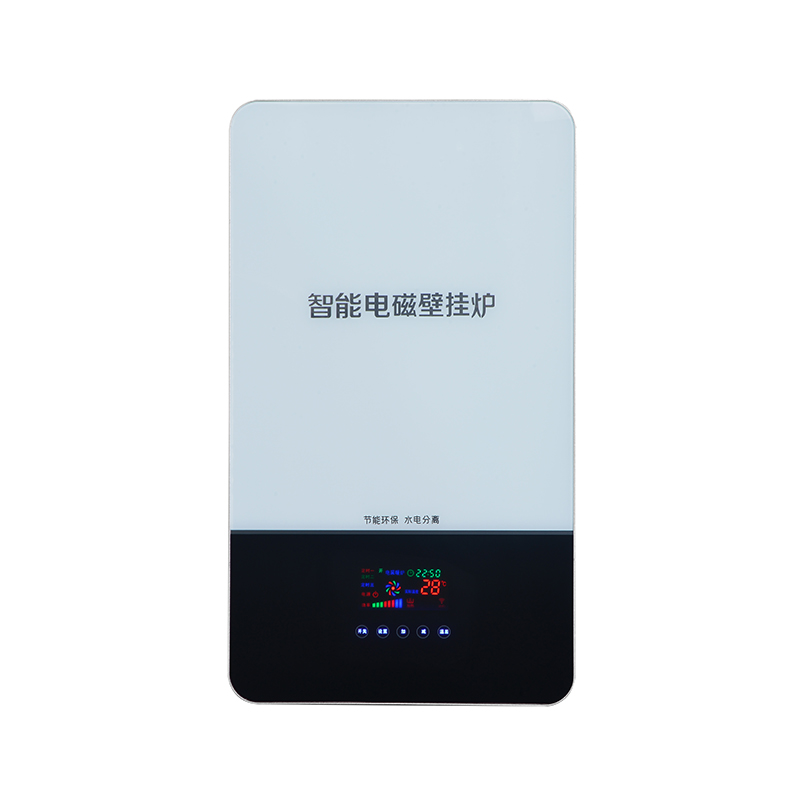
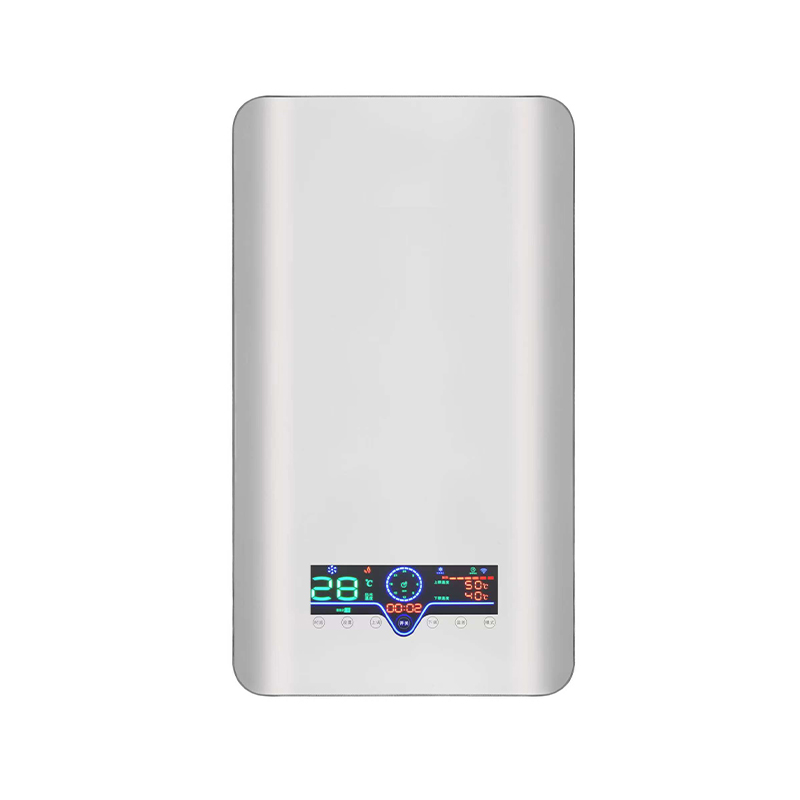


What are the advantages of electromagnetic heating furnaces in handling complex working environments?
Release Time : 2026-01-07
In modern industrial production, working environments are often challenging: high temperature and humidity, pervasive dust, limited space, frequent power fluctuations, and even the presence of corrosive gases or explosion risks. Traditional heating equipment often performs poorly under these complex conditions, resulting in high maintenance costs, low efficiency, and even safety hazards. Electromagnetic heating furnaces, with their unique technical principles and structural design, demonstrate significant advantages in handling complex working conditions, making them an ideal choice for many demanding industrial scenarios.
1. No open flame, no combustion, inherently safe and reliable
Electromagnetic heating furnaces heat metal workpieces by directly generating eddy currents within the metal workpiece through electromagnetic induction. The entire process requires no fuel combustion and produces no open flames, exhaust gases, or smoke. This characteristic gives it a natural safety advantage in flammable and explosive environments. Even when operating in confined or poorly ventilated spaces, accidents will not occur due to oxygen consumption or the accumulation of harmful gases, greatly improving operational safety.
2. Strong Anti-interference Capability and Adaptability to Voltage Fluctuations
Many industrial sites experience unstable power grids and large voltage fluctuations, posing a severe challenge to equipment reliant on stable power supplies. Modern electromagnetic heating furnaces generally employ high-frequency inverter technology and a wide voltage input design, coupled with an intelligent power regulation system, to automatically adjust output and maintain heating stability even under significant input voltage fluctuations. Some high-end models also feature soft-start and over/under voltage protection functions, effectively preventing equipment damage or process interruptions caused by power grid anomalies.
3. Compact Structure, Flexible Installation, and Adaptability to Confined Spaces
Because they eliminate the need for chimneys, combustion chambers, or large insulation layers, electromagnetic heating furnaces have a more compact overall structure, significantly smaller in size than traditional furnaces of equivalent power. Their modular design allows for flexible placement based on site conditions—they can be embedded in production lines, suspended beside robotic arms, or even integrated into automated workstations. This "plug-and-play" flexibility is particularly valuable in space-constrained older factories or mobile work platforms.
4. Dust and Moisture Resistance, Low Maintenance Requirements
In high-dust, high-humidity environments such as casting, forging, and mining, traditional resistance wires or gas nozzles are easily contaminated, oxidized, or clogged, leading to decreased efficiency or even malfunction. Electromagnetic heating furnaces, on the other hand, typically employ sealed cooling systems and anti-corrosion coatings for their core components, with no exposed heating elements, exhibiting strong resistance to dust, oil, and moisture. As long as the cooling water system remains unobstructed, the equipment can operate stably for extended periods. Routine maintenance only requires periodic checks of water quality and electrical connections, significantly reducing downtime risks.
5. Rapid Response, Adaptable to Varied Process Requirements
Complex working environments often involve multi-variety, small-batch production, requiring heating equipment to quickly switch process parameters. Electromagnetic heating furnaces heat up extremely quickly, and their power is infinitely adjustable, allowing precise control from tens of kilowatts to several megawatts. With a preset process library and intelligent control system, operators only need to select the material type and target temperature, and the equipment automatically matches the optimal heating curve, effectively handling frequently changing production tasks.
6. Low Heat Radiation, Improved Working Environment
Traditional heating furnaces have high surface temperatures, radiating significant amounts of heat radiation into the surrounding environment. This not only wastes energy but also exacerbates high temperatures in workshops, impacting worker health. In contrast, the heat from an electromagnetic heating furnace is primarily concentrated inside the workpiece, resulting in a low temperature rise and minimal heat loss from the furnace shell. In hot seasons or enclosed workshops, this feature significantly improves the operating environment, reduces air conditioning load, and enhances human-machine comfort.
Faced with increasingly diverse and demanding industrial applications, electromagnetic heating furnaces, with their inherent safety, strong environmental adaptability, flexible structure, and ease of maintenance, are gradually replacing traditional heating methods and becoming a reliable "heat source core" in complex working environments.
1. No open flame, no combustion, inherently safe and reliable
Electromagnetic heating furnaces heat metal workpieces by directly generating eddy currents within the metal workpiece through electromagnetic induction. The entire process requires no fuel combustion and produces no open flames, exhaust gases, or smoke. This characteristic gives it a natural safety advantage in flammable and explosive environments. Even when operating in confined or poorly ventilated spaces, accidents will not occur due to oxygen consumption or the accumulation of harmful gases, greatly improving operational safety.
2. Strong Anti-interference Capability and Adaptability to Voltage Fluctuations
Many industrial sites experience unstable power grids and large voltage fluctuations, posing a severe challenge to equipment reliant on stable power supplies. Modern electromagnetic heating furnaces generally employ high-frequency inverter technology and a wide voltage input design, coupled with an intelligent power regulation system, to automatically adjust output and maintain heating stability even under significant input voltage fluctuations. Some high-end models also feature soft-start and over/under voltage protection functions, effectively preventing equipment damage or process interruptions caused by power grid anomalies.
3. Compact Structure, Flexible Installation, and Adaptability to Confined Spaces
Because they eliminate the need for chimneys, combustion chambers, or large insulation layers, electromagnetic heating furnaces have a more compact overall structure, significantly smaller in size than traditional furnaces of equivalent power. Their modular design allows for flexible placement based on site conditions—they can be embedded in production lines, suspended beside robotic arms, or even integrated into automated workstations. This "plug-and-play" flexibility is particularly valuable in space-constrained older factories or mobile work platforms.
4. Dust and Moisture Resistance, Low Maintenance Requirements
In high-dust, high-humidity environments such as casting, forging, and mining, traditional resistance wires or gas nozzles are easily contaminated, oxidized, or clogged, leading to decreased efficiency or even malfunction. Electromagnetic heating furnaces, on the other hand, typically employ sealed cooling systems and anti-corrosion coatings for their core components, with no exposed heating elements, exhibiting strong resistance to dust, oil, and moisture. As long as the cooling water system remains unobstructed, the equipment can operate stably for extended periods. Routine maintenance only requires periodic checks of water quality and electrical connections, significantly reducing downtime risks.
5. Rapid Response, Adaptable to Varied Process Requirements
Complex working environments often involve multi-variety, small-batch production, requiring heating equipment to quickly switch process parameters. Electromagnetic heating furnaces heat up extremely quickly, and their power is infinitely adjustable, allowing precise control from tens of kilowatts to several megawatts. With a preset process library and intelligent control system, operators only need to select the material type and target temperature, and the equipment automatically matches the optimal heating curve, effectively handling frequently changing production tasks.
6. Low Heat Radiation, Improved Working Environment
Traditional heating furnaces have high surface temperatures, radiating significant amounts of heat radiation into the surrounding environment. This not only wastes energy but also exacerbates high temperatures in workshops, impacting worker health. In contrast, the heat from an electromagnetic heating furnace is primarily concentrated inside the workpiece, resulting in a low temperature rise and minimal heat loss from the furnace shell. In hot seasons or enclosed workshops, this feature significantly improves the operating environment, reduces air conditioning load, and enhances human-machine comfort.
Faced with increasingly diverse and demanding industrial applications, electromagnetic heating furnaces, with their inherent safety, strong environmental adaptability, flexible structure, and ease of maintenance, are gradually replacing traditional heating methods and becoming a reliable "heat source core" in complex working environments.